How Were Flowers Arranged in Chinese Scholar Gardens?
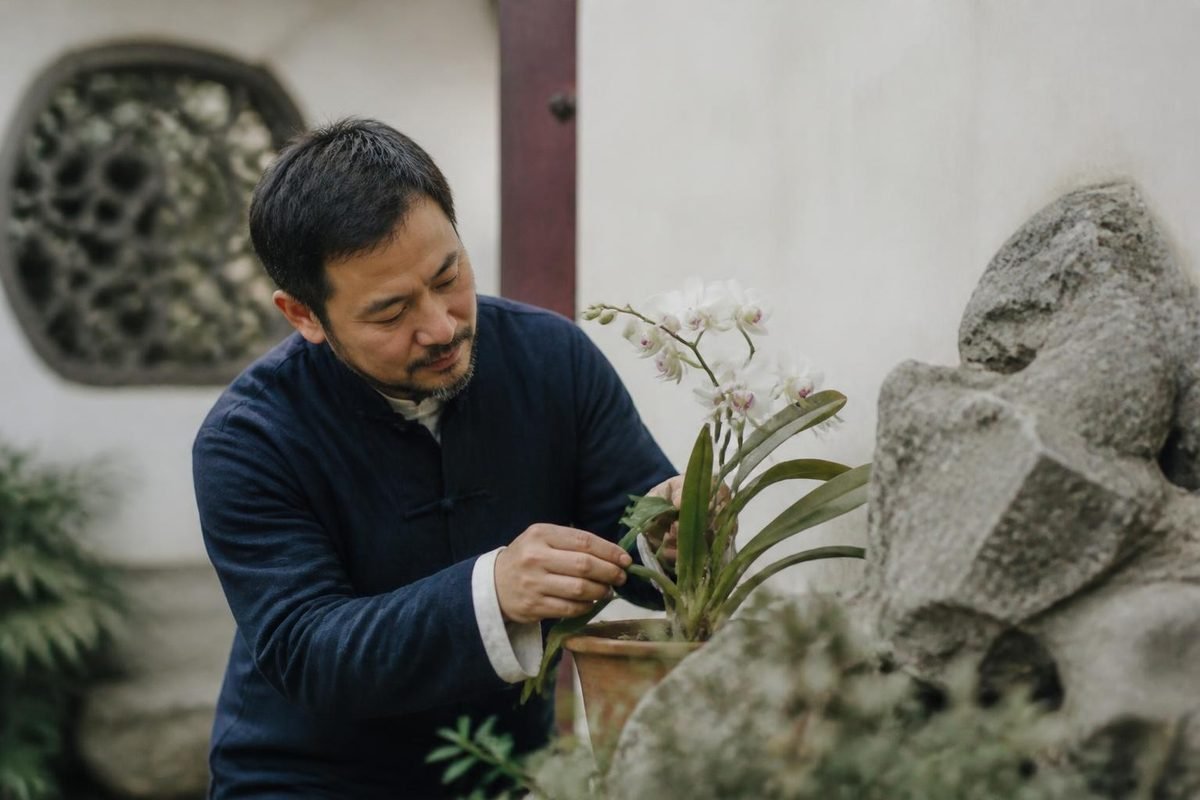
In traditional Chinese scholar gardens, flowers were placed as part of a larger landscape, among rocks, water, trees, paths, and buildings. Rather than filling beds with continuous color, gardeners often chose plants for their seasonal presence, symbolic associations, and relationship to a view.
Flowers within the garden scene
A scholar garden was meant to be experienced in stages. A path might turn beside a wall, then open onto a pond or a small courtyard. Flowers contributed to these scenes without necessarily becoming their sole focus.
Plants could soften the edge of a rock, bring color close to a pavilion, or draw attention to a window. Their placement mattered as much as their number. A flowering branch seen against a pale wall, for example, offered a different effect from a plant viewed across water.
There was no single plan used in every garden. Gardens varied in size and setting, and their planting changed with the seasons and with the preferences of their owners.
Plants chosen for season and meaning
Flowers and flowering plants carried associations familiar from Chinese poetry and painting. Their qualities could invite reflection as well as provide beauty. Several plants appear often in discussions of scholar culture:
- Plum blossom: valued for flowering in the cold and associated with endurance.
- Orchid: admired for its fragrance and associated with refinement.
- Chrysanthemum: linked with autumn and with the poet Tao Yuanming.
- Lotus: grown in water and associated with purity because it rises from muddy surroundings.
- Peony: appreciated for its large flowers and associated with wealth and honor.
These meanings were not rules for arranging a garden. A plant could be enjoyed for its scent, form, color, or seasonal character as well as for its literary associations.
Rocks, water, and empty space
Flowers were often one element in a carefully composed setting. Rocks could give a scene a sense of age and ruggedness, while water reflected plants and buildings. The contrast between a delicate flower and a rough stone could make both more noticeable.
Open space also had a role. A courtyard did not need to be crowded with flowers to feel complete. A few plants, placed where they could be seen from a room or along a path, could leave space for light, shadow, and changing weather.
Flowers close to the house
Some plants were grown in pots, allowing them to be placed near a doorway, on a terrace, or in a courtyard. Pots brought plants close enough for their leaves and fragrance to be appreciated at leisure.
Cut flowering branches and other plant material could also be displayed indoors in vessels. This was distinct from planting the garden, though both could bring seasonal flowers into the daily life of a household.
Questions about scholar garden flowers
Were the gardens full of flowers all year?
No. Different plants flowered at different times, and gardens also relied on foliage, rocks, water, and architecture for interest.
Were flowers arranged in straight rows?
Formal rows were not the defining approach. Plants were often considered as parts of views and scenes within the garden.
Did every flower have a fixed meaning?
No. Some had well known associations, but their meaning could vary with the viewer and the setting.
Related reading: SEO lessons for flower shops